Spot a fake
In 30 secondsFakes are everywhere, especially on popular cards. No single check is proof, so use several together and, best of all, compare with a card you know is real from the same set. For anything expensive, buy it already graded.
Know the real thing first
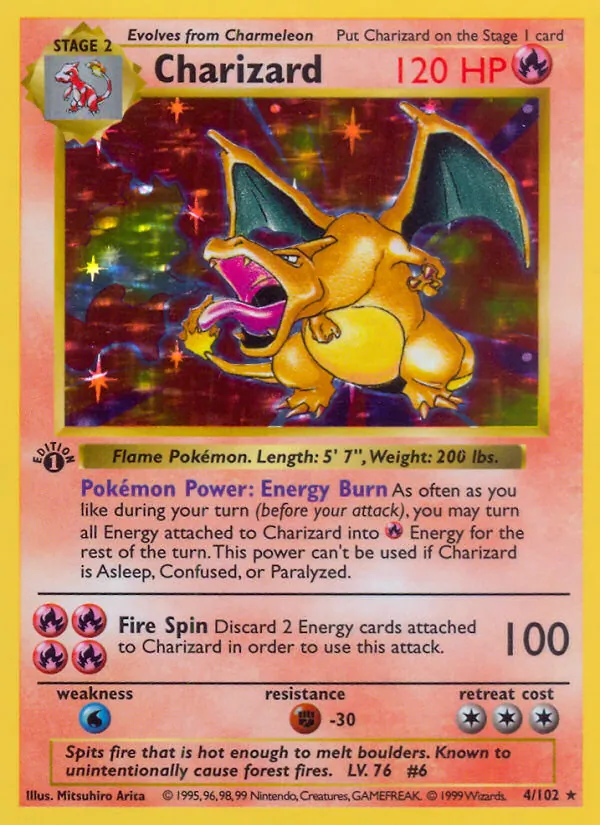

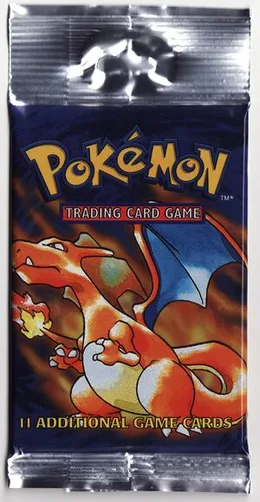
Compare any card you are unsure about with a genuine card from the same set: the font, the colour of the energy symbols, the shine of the holo and the blue of the back. Every set page on this site shows every card.
Card, pack and box images © Pokémon / Nintendo / Creatures / GAME FREAK (and Wizards of the Coast for 1999-2003), shown for identification only.
- The light test. Real cards have a thin black layer inside and block most light. Many fakes glow when a torch shines through. (Some older and Japanese cards let a little light through, so do not rely on this alone.)
- The back. The English card back has looked the same since 1999. Fakes are often too pale, too purple, or the swirl on the ball is blurry.
- Spelling and fonts. Read every word. Fakes often have spelling mistakes, odd line breaks, missing punctuation or fonts that look thin or stretched.
- Silly numbers. Absurdly high HP or damage is a giveaway.
- The shine. Real holos shimmer with a moving rainbow. Fakes are often flat, patchy or pixelated.
- Feel and edges. Compare the texture and the cut of the edges with a real card. Modern high-rarity cards are often textured.
Never do the "rip test" on a card you want to keep. Tearing a card ruins it, and looking closely at the edge tells you the same thing.
Sources (checked October 2026): ShopGoodwill: spotting fake cards · Card Codex: identifying fakes